
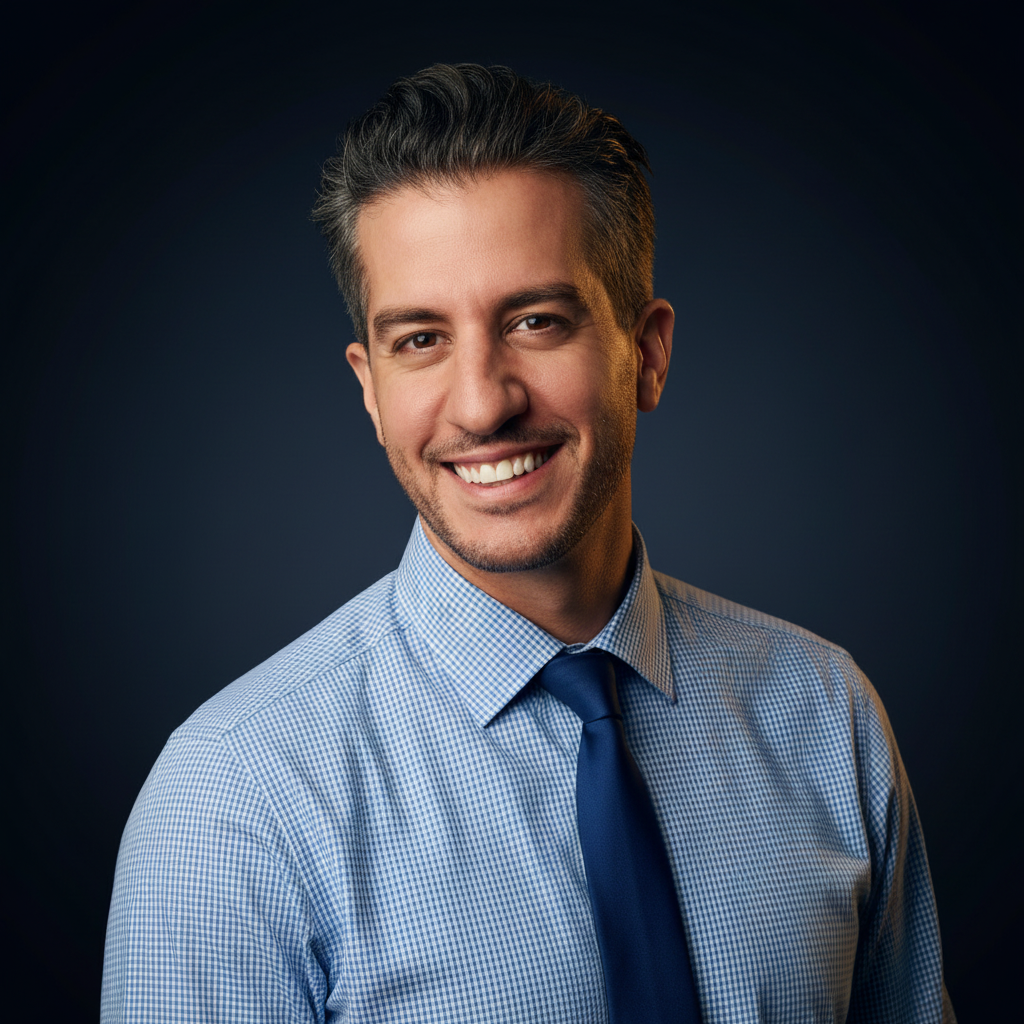
Baran Kayhan
🇨🇦Canada· Toronto
Izmir-born, CFA, Toronto-based hedge fund manager — second on the MMVR $1M+ Enhanced Growth podium in 2026 Q1 at +52.3%.
Izmir-born, Toronto-based, CFA charterholder, hedge fund manager — Baran Kayhan is the rare USIC competitor where the public bio reads like an institutional pitch deck before you get to the audit numbers. He runs Euclid Technologies as a Toronto-based hedge fund, and his 2025 USIC entry sat in the $20K-$1M Enhanced Growth division, where he posted +91.1% on the full year (and reached +135.1% intra-year). For 2026 he promoted up into the MMVR $1M+ Enhanced Growth tier and is sitting 2nd at +52.3% Q1, behind the Icewater Capital entity (+76.8%) and ahead of Vikash Raniga (+36.4%).
Enhanced Growth allows futures and long options on top of the Stock Division ruleset — the same setup Tito Adhikary used for his +2,115.1% 2025 record. Kayhan's two-year tier-jump (from a +91% smaller-account audit to a +52.3% Q1 on the $1M+ tier) is a textbook case of the USIC career-ladder positioning: prove the methodology at the smaller account size, then scale into the institutional tier.
The CFA + named-firm signal is unusual on the EG leaderboard, which skews toward independent discretionary operators. He has no surfaced X / LinkedIn / personal site under his name, which means outreach routes through USIC's organizer channel or directly through Euclid Technologies.
Interview
CFA is an institutional credential. Enhanced Growth USIC is competitive trading with futures and options. Is that a contradiction or a synergy?
I wanted to have institutional credentials while starting our fund, Euclid Technologies. I have never worked in banking or another investing firm, I have always risked my own and my business's money. CFA credentials take longer to acquire than an MBA, roughly three years provided you pass all levels and have relevant capital allocation experience, and is finance focused, with many business-relevant units such as accounting, corporate finance, and equity valuations. I had already taken a course with Aswath Damodaran from NYU Stern, the "dean of valuation", called Advanced Valuation, to learn how to value businesses. The CFA was a natural next step. I don't particularly love trading. I love businesses.
You manage a hedge fund with real LPs. How do they react to your participation in USIC? And what is Euclid Technologies' strategy, do you use the same instruments in the fund as in USIC?
Our fund has two different strategies: Quality Growth and Opportunities. Quality Growth is where we apply strict valuation metrics, you could call it Buffett-style investing in the technology sector. We have been valuing companies such as Nvidia since 2017, some of the research is public. I have my partner Nico to thank, who taught data science and financial modeling at the University of Western Ontario and the National University of Singapore, for foreseeing the growth of machine learning and AI and giving us the confidence to go all in. He bought the first Nvidia supercomputer at the same time as OpenAI, to help make investing decisions. There are many companies that do not fit the Quality Growth criteria but have amazing prospects. This is Opportunities, and it is the same strategy as the USIC portfolio. It is aggressive and on a different risk scale, using options and leverage. Our investors responded positively to USIC results, but we make sure they are crystal clear about the differences and only accept those who understand the potential volatility.
You only compete in USIC, not IQC, not Robbins. Is that a deliberate position?
I don't know about IQC or Robbins. I once came across USIC on social media and thought it would be a nice proving ground.
Are you using AI in your trading right now? If so, at what stage of the process?
We currently use AI for company research only, to validate or disprove theses. All execution is manual. A future systematic strategy we are working on may use more, but again this would be screening, data cleaning, and rules-based execution, not a black-box AI.
Many traders are afraid AI will kill their edge. Where is the line between those who will win from AI and those who will lose?
All investors should make use of AI, but be wary of its self-affirming nature. AI is helpful in the decision-making process, but investors and traders should own the decision. I am excited about the future.
You have a CFA, LPs, a fund. When you're in a drawdown, are you more afraid of the market or of the phone calls from investors?
We are blessed to have fantastic LPs who have put their trust in us, and so far the markets have mostly rewarded us. We do not take positions we cannot explain. I am happy to talk to anyone, and thankful for my partners Nico and Kilsaris who keep us on the right path.
Opportunities Fund in five years, do you see yourself managing $1bn+? Or does a USIC record matter more to you than AUM?
Although I love the competitive nature of USIC, making money for our LPs will always be the priority. The world is a rough place. If we can make their hard-earned savings grow, absolutely nothing would please us more.
If you could give one piece of advice to an engineer who wants to get into trading, what would you say?
Pay attention to your statistics course. Invest in what you know, or learn absolutely everything about what you want to invest in. Engineers are puzzle solvers, and markets are one of the most interesting puzzles that keep redefining themselves. However, if I were a better engineer than I was, I would have liked to go build something fantastic rather than be a trader or investor.
You grew up in a country where inflation hit 80%+ and the lira devalued overnight. Did that make you more aggressive with risk, or more cautious?
I was young, and still think I am, so it made me open my eyes to a wider range of opportunities. If I were older it would have definitely made me more cautious. In Turkey, I have seen many long-established businesses struggle. EBITDA and income statement profits do not make or kill a business. Cash flow does. This is from my father.
Your family is a business family from Izmir. What did they do with capital during the hard years, and how did that shape the way you think about money?
We always invested in our businesses. My grandfather, my father, and my uncle are incredible hard workers. They always felt ultimately responsible for their employees, families, shareholders, and the lands they grew up in. They prioritized work and stewardship. They would have definitely made more money by investing in real estate on many occasions, but I don't think they have regrets. From them I learned integrity, the power of working with the right people, managing tough environments, and negotiating. I only hope to make them proud.
What was the single experience, not a trade, not a book, that permanently changed how you think about money?
I was in a bad partnership once and overinvested while having no decision-making power, and it ended very badly. Choosing the right business partner is more important than any other business decision, even more than the business idea itself. I am blessed with my partners Nico and Kilsa.