
trading-tournaments.com
Mus_money_

Mus_money_Verified

ICTC 2025 finalist (WhiteBIT, May 9-10, 2025) — 6th of 8, most active with 49 trades; 3rd at Dubai live tournament

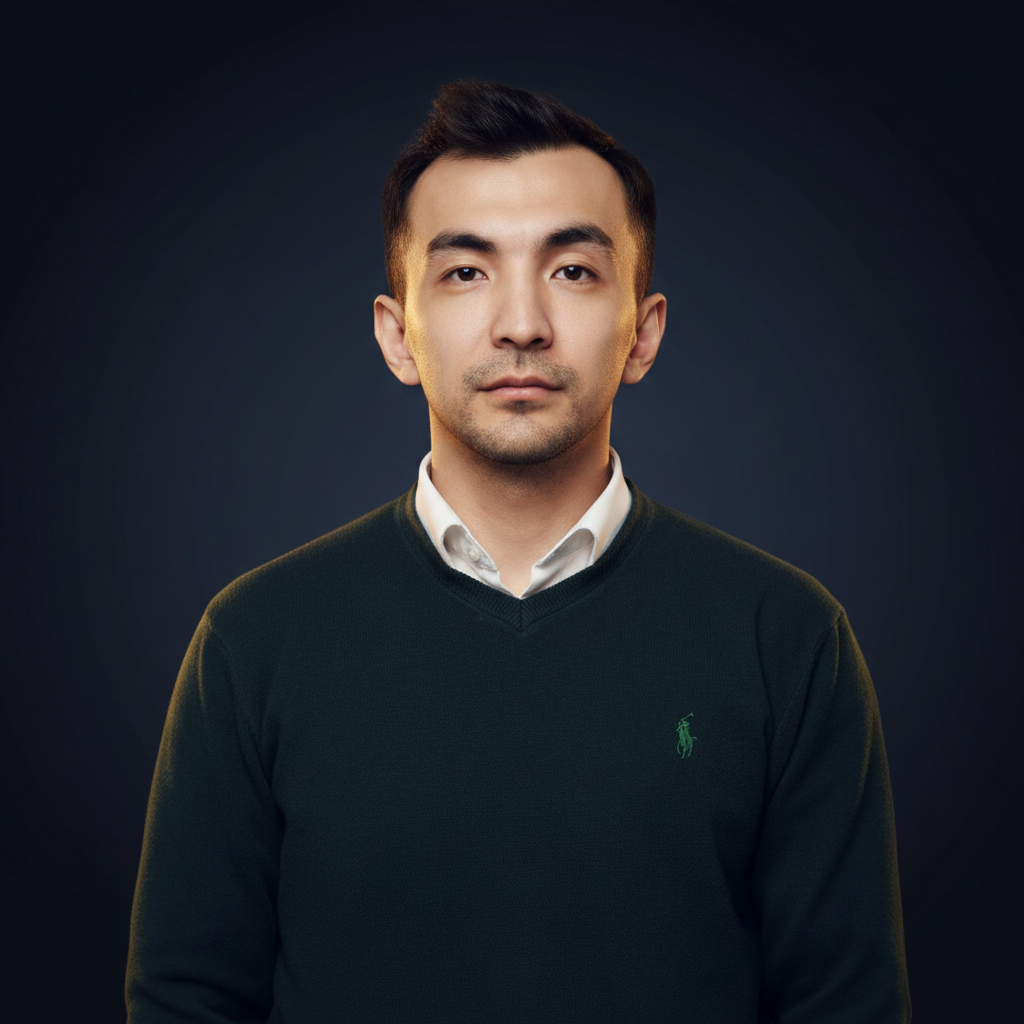
Muslim Abdullayev

🇰🇿Kazakhstan· Almaty

A trader's only real opponent is himself.

Muslim Abdullayev, known online as Mus_money_, is a crypto trader from Kazakhstan and one of the most visible market figures in Central Asia, with a following of around half a million. He opened his first Bitcoin long near $1,600 in 2016 and has spent roughly a decade in the industry. He began inside the industry, working in the Kazakhstan division of Bybit, translating and promoting listings, before leaving to build his own name as an independent voice on the side of retail traders.

His story is built on a hard comeback. In 2019 he lost around $200,000 and stepped away from the market for a year or two. He returned during the post-COVID rally and by 2021 had rebuilt his account and grown it roughly fivefold. On the competitive side he took third in a 2023 online Master Copy Trading competition, finished sixth of eight at WhiteBIT's live ICTC 2025 as the most active finalist with 49 trades, and later placed third at a live tournament in Dubai.

A swing trader who works mainly on four-hour charts, he treats discipline as the real edge: isolated margin, a strict risk framework, and physical routines like yoga and WHOOP tracking to keep his head clear. He is now building a trading terminal that monitors a trader's psychology and blocks impulsive entries. His stated mission is to bring something positive into a market full of noise, and to help retail lose less and learn more.

Interview

Many would say trading is just gambling in a nicer wrapper. What's your answer to that, given your past?

To be honest, short-term trading often is gambling. A trader's only real opponent is himself. Many traders live with unrealistic expectations and convince themselves that they have discovered a technique that will allow them to make money consistently. Unfortunately, that is usually an illusion.

Trading is a lot like surfing. Even professional surfers who understand the ocean know that they will not catch every wave. In my view, a professional trader is someone who does not trade frequently. The traders who remain profitable are usually the ones who think long term and hold positions for longer periods.

I am especially critical of the way scalping and day trading are marketed. Much of that education encourages techniques that most people cannot sustain over the long run. Benjamin Graham expressed a similar principle: the more frequently a person trades, the less money tends to remain in the account.

So yes, short-term trading can become gambling. Long-term trading and investing are different. They can be an intellectual competition and even a sport, one that requires discipline, patience, and endurance.

In 2019 you lost around $200,000. What was going on inside you in that moment, and how did you put yourself back together?

This is a path that many traders go through. Entrepreneurs often fail in their first or second business, and traders can experience the same thing. Anyone who enters a market, stocks, bonds, crypto, or gold, may eventually reach a point where they believe they are in control. That illusion can lead to the loss of an entire account.

At the time, it felt as though my world had collapsed. I was disappointed in myself and in everything around me. For a while, it seemed as though life itself was a scam. But with time, I understood that I was responsible for my own problems.

I stopped trading for one or two years. I returned after the COVID period, when the markets were rising strongly. By 2021, I had rebuilt what I had lost and multiplied it roughly fivefold.

I do not believe there are many serious traders who have never blown an account or suffered a major loss. The most important thing is to extract the lesson and write it into your investment and risk-management strategy.

After everything you've been through, what do you fear most today?

I thought about this for a long time, and honestly, I do not think I am afraid of anything specific.

When I took part in trading championships, I was not afraid of the other traders, because every trader is really competing against himself, against his illusions, habits, and emotional patterns.

Whenever I make a trading decision in the morning, I ask myself: am I thinking clearly as a trader, or am I reacting to a series of bad days, the desire to recover losses, or a feeling of desperation? I would not call it fear. I would say that I stay alert. I constantly watch myself and do not allow myself to become careless. That is the trader's path.

You position yourself as "fired from Bybit, now on the side of traders." What actually happened with your exit from Bybit?

I really was fired from Bybit. I worked in the Bybit Kazakhstan division, and my knowledge of Kazakh was not strong enough for me to communicate naturally with the local community. I had an accent, and at the time the decision was painful. I felt offended and disappointed.

After that, I decided to start showing people how exchanges work from the inside. While I was at Bybit, I translated content from Russian into Kazakh and promoted token listings, including projects that later performed badly.

In my experience, many listings on large centralized exchanges are designed to give early investors an opportunity to exit. New retail investors often assume that a listing on a major exchange is a guarantee of safety. In reality, it can be the moment when the risk becomes greatest, because earlier investors may be selling into the new demand.

Today, I am glad that the dismissal happened. I used it to build my personal brand, which now has around half a million followers. Most importantly, I am still on the side of traders. I see that as my mission.

Is there something you know about exchanges from the inside that you still can't say out loud?

I will not name any companies, but some exchanges divide traders into profitable clients and people who systematically lose money, what the industry might informally call 'losers.' Every exchange keeps detailed statistics on its users.

On some smaller platforms, a trader who repeatedly loses may be moved into a simulated environment. Instead of genuinely trading against other participants in the order book, the platform can create an imitation of trading and effectively act as the counterparty. If the trader is liquidated, the platform keeps the loss.

I am not saying that the largest centralized exchanges operate this way. But I believe that some smaller exchanges do.

Tell me how you ended up at the world trading tournament, and what the road there looked like.

There were three main reasons. First, I had placed third in an online competition for the best traders of 2023 in the Master Copy Trading category. Second, I was creating a great deal of content and had become visible. Third, I regularly attended industry events, met people, and built relationships. People knew me, talked about me, and tagged me online.

That visibility is why I was invited. My advice to anyone who wants similar opportunities is simple: trade well, speak publicly about what you do, create content, do not be afraid to show yourself, and build a strong network.

When organizers later need traders for an event, they will remember the people who have already demonstrated both skill and visibility. That is how invitations happen, sometimes with travel and accommodation covered.

What was your final result at the tournament, and how do you rate it yourself?

At my first live tournament, I finished sixth out of eight participants. It was a poor result, although I was relieved not to finish last.

At the next tournament in Dubai, I finished third. Overall, I am satisfied with that result.

However, I do not believe short trading tournaments fully measure a trader's skill. A one- or two-day event contains a large element of gambling. The outcome depends heavily on luck and on the type of market that happens to appear during the competition.

I am a swing trader. I normally work with four-hour charts, so I begin these short tournaments at a disadvantage compared with traders who are used to one-minute timeframes. I would gladly participate in a longer-term competition. I might still join a short event for the show, but it is no longer something I strongly want to do.

What is it like to trade live on stage, with thousands watching in real time?

It is at least twice as difficult as trading at home in front of your own computer. The pressure becomes even greater when you are a public trader, because a well-known trader has a reputation to lose.

That creates an enormous psychological and mental burden. People in the comments may write, 'He is a weak trader. He blew the account.' But they do not understand the pressure experienced by someone who is trading in public while carrying the expectations of an audience.

In my opinion, every critic should try trading live on a stage at least once. It is extremely difficult, and not every trader can handle it.

What did the tournament show you about your own trading that you didn't know before?

First, I discovered that I am not good at trading with cross margin. I normally use isolated margin, where the risk on each position is clearly separated.

At the European tournament, we had to use cross margin. When I saw that I still had available equity and a positive dollar P&L, I felt that I could keep adding to the position and averaging the entry. But it became mathematically difficult for me to calculate the true risk across the account.

Psychologically, I handled the tournament very well. I prepared carefully: I use a WHOOP fitness tracker, eat properly, exercise, and practice yoga. All of that helps restore and stabilize my mental state.

But I learned one clear lesson: I do not want to trade with cross margin again.

Was there a moment at the tournament you'll remember forever, dramatic, funny, or painful?

I remember how strongly my wife supported me. At one point, I had the highest unrealized P&L in the competition. She came over and said, 'Maybe you should take the profit?' I replied, 'No, I will keep holding the position.' I should have listened to her. My wife has very good intuition.

There was another moment that was both funny and painful. I looked at the leaderboard and saw my name in last place. I assumed that I was trading worse than everyone else. In reality, the ranking was random because everyone was still at zero, and my name appeared near the bottom simply because of the alphabetical order.

I misunderstood the table, increased my risk, and started making mistakes because I thought I was already losing. It was one of the most foolish reasons imaginable to break my risk rules.

What's the one mistake you see in 90% of the traders who come to you?

They cannot stop.

Many traders live with the illusion that the price will eventually move in their direction. Because of that belief, they keep losing more and more of their account.

A trader must learn to stand up from the computer, delete the trading app from the phone, stop trading, rest, and give the market time to develop. It is extremely difficult to escape a state of gambling, urgency, and emotional need.

That is why a trader should have other important parts of life: a business, a job, children, family, or any meaningful responsibility outside the market. Without that balance, it is very difficult to remain profitable.

There is a paradox here. Some people trade full time and lose because they feel they have no choice but to keep trading. Meanwhile, investors who have other things to do may watch the market with only one eye, and those are often the people who make the largest returns.

Being public brings hate too. How do you take it when people tear you apart in the comments?

At first, it hurt. The social pressure was real. Over time, however, I became used to it. Now I see it as part of my work.

I can admit that when I first started trading, I also wrote negative comments about other people. I had unrealistic expectations of them. When they did not meet those expectations, I became angry with them and with myself. But those expectations had been created inside my own mind, so the real problem was mine.

Now, when I receive harsh comments, I understand that the person may be deeply dissatisfied with his own life, or that I may have disappointed him in some way. The second possibility is unpleasant for me, because I do not want to disappoint people. But it is still important to understand that the person's interpretation and expectations belong to him.

You're called one of the most prominent crypto figures in Central Asia. What does the trading community in your region look like, and how underrated is it globally?

In my view, Kazakhstan is one of the best countries in the region for crypto trading. Under the recently announced framework, traders using licensed local platforms may receive a three-year tax incentive and can withdraw their funds within the regulated system.

Kazakhstan also has relatively strong regulation and specific crypto legislation. I believe it is the leading country in Central Asia in terms of developing the crypto industry.

The country is also moving toward the tokenization of real estate and other assets. In that sense, Kazakhstan is ahead of much of the region.

We also have many capable traders, but most of them remain anonymous. The global industry rarely hears their names, which is why I believe the community is still significantly underrated.

If you could tell one thing to a young Kazakh opening a chart for the first time, what would it be?

My first advice would be: do not start by trading. Start with spot investing.

Warren Buffett is famous for applying the principles of value investing, buying deeply undervalued shares in financially strong companies and being prepared to wait for years. That approach has survived for decades because it is based on patience rather than excitement.

For someone entering crypto, I would focus on one rule: think long term. Use higher timeframes on TradingView and consider buying Bitcoin during major market cycles. Everything else can quickly become uncontrollable chaos, where a person loses discipline and starts living through false expectations.

Choose one strong asset, accumulate it gradually in heavily oversold areas over several months, and be prepared to sell only years later. The key is to follow a clear set of principles and rules.

Five years from now, who is MusMoney and what is he doing?

I opened my first Bitcoin long at around $1,600 in 2016. I have now spent roughly ten years in the crypto industry, and in 2031 I still expect to be investing and trading. I genuinely love this work.

We are currently building a trading terminal that helps traders monitor their psychology. If the system sees that a person is repeatedly violating risk limits, it can block further trading and prevent the person from destroying the account. It also restricts entries so that a trader cannot open a position anywhere on impulse. The goal is to allow trades only in strongly oversold or overbought areas where a meaningful opportunity may exist.

I have dedicated my life to trading and investing, and I will continue doing it. I will also keep developing my social media platforms and helping a new generation of traders through YouTube, TikTok, and Instagram. The crypto market contains a great deal of fraud and toxicity. I want to bring something positive into this industry. God willing, I will do everything I can to help people lose less money and earn more.

Sources