
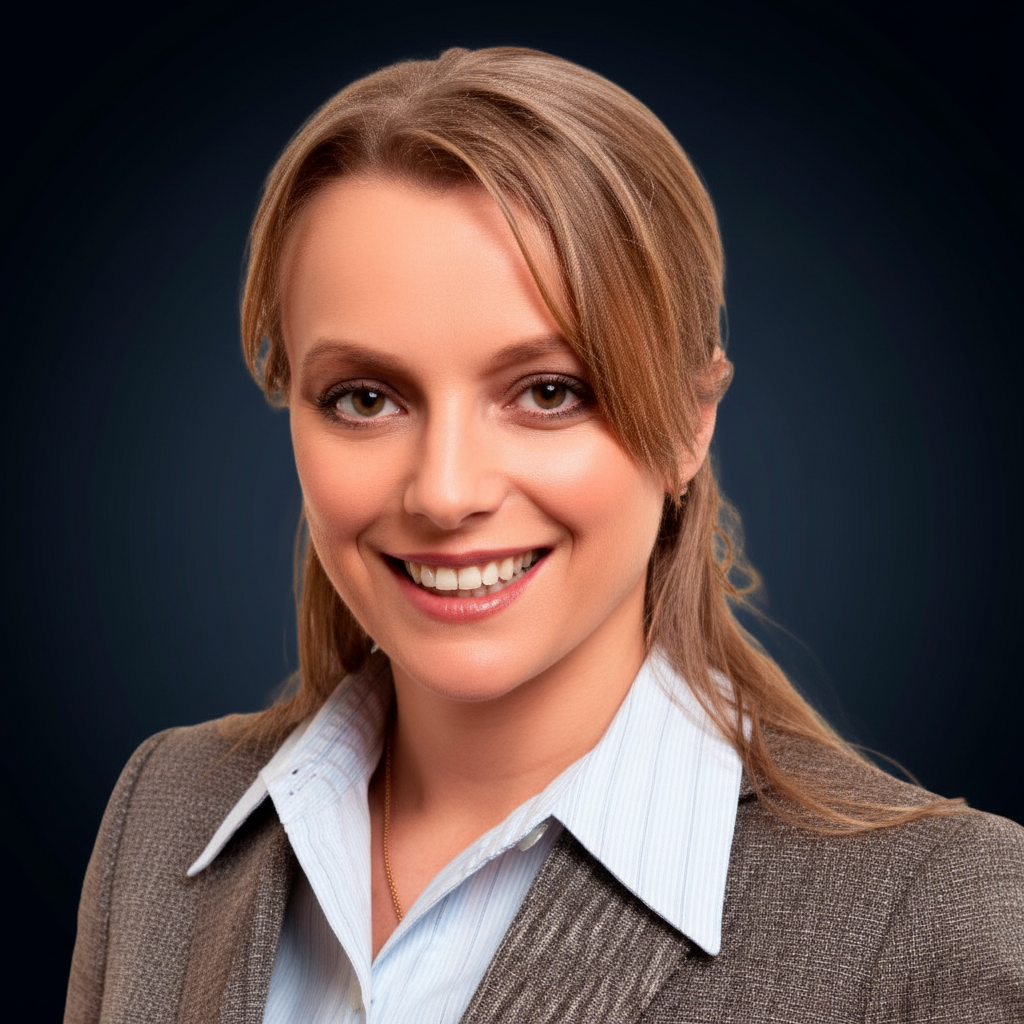
Petra Ilona Zacek
🇺🇸United States· Lake Havasu City, Arizona
"For me it's better to be feared than disrespected."
Petra Ilona Zacek is a Czech-born futures spreads trader whose career ran through Europe's biggest institutional trading floors before she became a champion in her own right. She spent over 12 years in Vienna, earning a master's in tax and finance, then traded across Frankfurt (at the time the largest floor in Europe, 500-plus people), London (nearly 12 years, much of it at Merrill Lynch) and Paris, through institutions including Natixis and Credit Suisse. A fluent Russian speaker, she was in the thick of the market during the 1998 Russia default. Today she is based in Lake Havasu City, Arizona.
In 2018 she won the World Cup Trading Championship with a +257.9% return, having peaked above 460% in the third quarter, and remains the only woman to take the title in more than three decades. A specialist in futures spreads, she trades in a way she says 99% of traders do not, which is precisely why she can make money when almost no one else can, and she runs a closed-end hedge fund managing family and friends' capital. Composed by nature, she describes having no adrenaline spikes and "zero trading itches."
Her development came not from the lineage she is often placed in, she has never met Andrea Unger, but from her mentor Michael Cook, a fellow institutional trader she met at a 2016 New York course, and from time spent learning non-institutional trading directly with Larry Williams in St. Croix. She still gathers regularly with Cook, Kurt Sakaeda, Kevin Davey and Williams at the Traders Expo in Las Vegas. Her philosophy is unsentimental: she loves doing something exceptional that few can replicate, and sees no shame in loving to make money.
Interview
Vienna, Frankfurt, London, Paris, four different trading floors, four different cultures. Which was the loudest? Where did you feel truly at home?
I lived over 12 years in Vienna and went to college there to get my master's in tax and finance. At that time I did feel more Austrian than Czech, until I met my husband. Vienna was a quite laid-back trading floor, and a very good place to learn without extreme pressure. Frankfurt was the biggest trading floor in Europe at that time, with over 500 people capacity; we did sprint races around Christmas on the floor because of how big it was. London was a big deal, "just" 300-plus people, but one of the big-shot style places, Merrill Lynch. I lived almost 12 years in London; at first I hated it and tried to travel as much as possible, which made me very good in client business and printing money, and in the end I got used to it. Paris was less than 2 years, very similar to Vienna, laid back with a French flavor, for example going for a glass of champagne during lunch hours, not working on weekends or holidays.
Voice, paper, eye contact, hand signals, then screens. What did you lose when trading moved off the floor, and what did you gain trading on your own?
For context, only about 5% of my trades are algo, and they are not based on Andrea's approach at all. I am sorry to break this to you, but all but one trading floor nowadays are electronic; no one is waving hands and shouting like crazy anymore. Everyone is very focused on making money. On the contrary, when people get excited and their heart rate goes up, it impairs clear brain function; therefore most of the superstars on the trading floor never shout and are very composed. I am very lucky, as I do not have adrenaline spikes when I trade and I have zero trading itches; if I could, I would make all my money on one single trade. When I started trading on my own, I missed the energy, the market talk, the team and the people interaction and brainstorming, because when you talk to people you might come up with an idea that leads to a major trade. By energy I mean the way you feel when things are happening on the trading floor; you literally feel the pain of the market when it goes down and the adrenaline when it is going up. What I love is that there is no risk, compliance, due diligence, approval committees, legal and a plethora of other things in my way slowing down my trading and distracting my focus.
From 1983 until you, only one female champion in 35 years. How did you experience that ratio standing on the trading floor?
Every floor was the same; women were around 5 to 10% of the overall people, and 99% of women were secretaries, so at the very beginning sometimes people would ask whose secretary I am. That being said, once you make money, everyone knows your name and no one will ever think of you as a woman versus a man anymore; no one cares. In the Championship, and outside the institutional world, I am acutely aware that people are scared of women who are really good in a male-dominated industry. I don't mind that at all; for me it's better to be feared than disrespected.
When you first walked onto the trading floor, were you seen as a woman or as a trader? And when did that change?
On September 1st, 1998, one week after the Russia default, everyone was focused on the fact that I spoke perfect Russian and was able to help. When you are billions of dollars in a hole, there are no second thoughts with regard to gender whatsoever.
Andrea Unger, Serafini, Larry Williams, and you, the only woman in that group of champions. Does that feel like a special responsibility or like loneliness?
Neither. When I was on the trading floor, because of the vast insider information, I wasn't able to trade my own money, but I was able to go to St. Croix and spend time with Larry and learn how it works in a non-institutional setting and what he does. I knew right there that my trading life wouldn't end when I stopped working on the trading floor. I made a lot of friends I was able to lean on and cooperate with after I set up my own hedge fund and started trading my family and friends' money.
You announced your win on Facebook before Robbins did. What was that moment like?
I spoke to the owner of Robbins almost every day at that time, and my strategy in the last competition quarter was purely set up to win, not about trading anymore. So I knew I had won about one week before the competition ended. It was simply a validation of my strategy, which I really enjoyed.
+257.9% on your championship account in a single year. What was going through your head during that process? Did success itself start to feel like pressure?
It's "meh" to me, since I was over 460% during Q3 of 2018. It is well known that if you make over 200%, you have a shot at winning the Championship. I am a very composed trader, to be honest, so I was really focused on keeping the number one spot once I got there. Until then the trading account was simply a smaller piece of my overall portfolio; I simply traded a smaller size of my normal position in that account. I am a very private person, and my hedge fund is a closed-end one, so there was no pressure, since nothing really changed for me.
People often place you in the Larry Williams and Andrea Unger lineage. Who actually shaped your trading, and how?
Andrea Unger didn't train me. I am yet to meet Andrea in person. In 2016 I applied to a 4-day trading course in New York organized by Michael Cook, Kevin Davey and Andrea Unger, with a special guest, Kurt Sakaeda. For this course you had to apply, show your portfolio or explain how you trade, and be approved, as it was quite a high-end course. I was one of 30 people accepted; if I understand correctly, Serafini took part in it the year before. Andrea did not come to the course, because he fell ill 2 days before and ended up in the hospital, so he did a smaller part remotely. But I had taken one of his courses prior to coming to New York, as part of my preparation for the event. I wanted to get to know everyone presenting and understand what their trading is about. At this course I really liked Michael Cook's part, as he had an institutional background like me and traded completely differently than Kevin and Andrea, who were purely algo traders. I spent a lot of time talking to him during the breaks and asked him at the end if he would be my mentor. He told me he wouldn't be my mentor, because in his opinion I didn't need one, but he agreed to stay in touch frequently under one condition: I had to compete in the Robbins Championship. In Q4 2017 I did a test run in the smaller quarterly championship, where I ended 4th. I simply wanted to see if it would have any negative impact on my trading or mess with my head. Because it worked out fine, I signed up for the Annual Championship in 2018. Since 2016 I have met with Michael Cook, Kurt Sakaeda and sometimes Kevin Davey on a regular basis. We usually all come to the Traders Expo in Vegas, which takes place twice a year. It's not that we think we can learn so much from the expo; it simply gives us the chance to come together for 4 days and talk about nothing but trading, non-stop. Larry also comes quite frequently to present, so we see each other there too. These get-togethers are amazing, and this is exactly what you will never get from any book, Zoom call, YouTube or TikTok.
Natixis in Paris, Credit Suisse in Moscow, Vienna, Frankfurt, London, and now Lake Havasu City, Arizona. Which of those places changed you the most?
I probably learned the most while at Merrill Lynch in London. Lake Havasu City, Arizona changed me the most, as I went from a very high-level job with two personal assistants commanding my schedule in 10-minute increments, endless pressure, budgets and cutthroat money-making, to no pressure and no outside expectations, where only you decide how much you push yourself to become a better human being today.
Two strong, creative minds under one roof. How do you leverage each other without getting in each other's way?
My husband is not a trader; he is a God-gifted musician, producer, former professional athlete and successful businessman, meaning one of the most creative people I have ever met. We are a perfect combination of people who leverage each other's gifts and talents.
If you strip away the results and the numbers, what keeps you in trading? What do you love about it even when it's painful?
I am a futures spreads trader, and I am really, really good at it. The way I trade, 99% of traders don't. That's why I can make money when almost no one can. Even seasoned futures traders frequently do not understand what I do if we start talking about it. I love that I am doing something exceptional that very few people can do; it is very difficult to replicate unless you have a deep understanding of the futures markets. That being said, I love making money, and there should be no shame in saying it. After all, this is what trading is about: making money.
Was there a moment when you wanted to quit, not because of losses, but simply from exhaustion with the process itself?
These moments always come, mostly because of secondary issues that impair your ability to do the trade. Issues like IT (hardware and software), compliance, brokers and stock exchange due diligence, requirements and enablements, tax considerations and so on; the list is endless. That's why I keep my setup as simple as possible, to have very few headaches.