
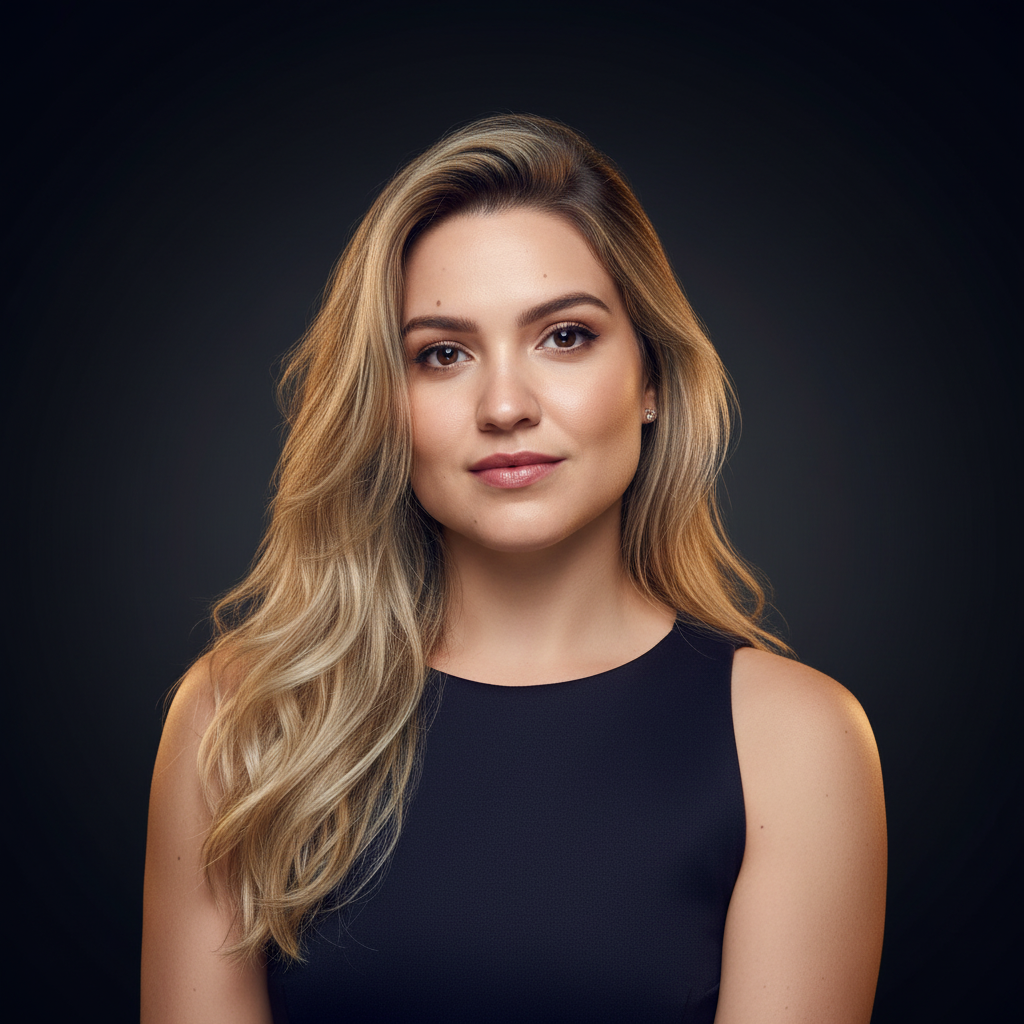
Regiane Morais
🇧🇷Brazil
One of the Copa BTG Trader 2025 participants who put her hand up on Instagram — a face for the Brazilian retail day-trade field beyond the headline.
Regiane Morais didn't arrive at trading through a chart pattern or a YouTube channel. She arrived through a decade of managing real businesses — where every financial decision carries real consequences and the market is the final judge. That parallel, between corporate risk management and day-trade execution, is the foundation of everything she does.
She lives by a philosophy she calls "Discipline First": freedom only exists through consistency. In trading, that means never negotiating with her own method. If her maximum risk is X, she doesn't open exceptions for impulse. If the setup needs Y confirmations, she waits. The result is an operational composure that most retail traders never reach — the ability to close a losing position calmly, not because the loss doesn't hurt, but because the plan was followed.
She structures her day like a marathon: morning hours belong to the market, when mental clarity is highest; business management and team leadership happen in dedicated blocks; and sport — Crossfit, running — is non-negotiable, because that is where she recharges the mental energy that makes execution under stress possible. Not perfect across all hours, but 100% present in each block.
Her biggest early mistake was the same as most: searching for the magic indicator, the perfect setup, the beautiful trade from entry to exit. Time cured it. Her advice to anyone starting out: stop looking for the method that makes you rich fast, and find the method you can live with every day, long enough to understand how it actually works. The market pays for intelligence, patience, and the discipline to follow a plan. Treat it like a real business — or it won't treat you like a professional.
She was one of fourteen Copa BTG Trader 2025 participants who surfaced on Instagram and tagged the event themselves: a self-disclosed face of Brazilian retail day-trading in a competition that drew over 100,000 registered traders.
Interview
You've been managing businesses and operating in markets for nearly a decade. How did the discipline you apply in your companies — and in sport — shape your approach to trading, especially in risk management, execution under pressure, and cutting losses?
For me, discipline isn't something I switch on or off — it's the foundation of everything. In the companies I manage, every financial decision has a real impact. In trading, the market is the final judge. The biggest parallel is respect for process. When I train Crossfit or run, I understand that there are no shortcuts to performance — it's repetition and correct execution. Trading is exactly the same. My discipline of cutting losses comes from that athlete mindset: if the move isn't going as planned, I don't deny reality — I close the trade. Mistakes in the market are usually emotional, and my high-performance routine is what keeps my emotions in check so I can execute what the chart shows, not what I wish it would show.
You are a high-performance athlete, a business manager, and a day-trader simultaneously. What does your daily structure look like — and how do you maintain quality across all three without sacrificing any of them?
The key word is "quality time." I structure my day like a marathon: each stage has its moment. I start the day focused on the financial market, when mental clarity is at its highest. Business management and team leadership happen in dedicated blocks — strategy and problem-solving. Sport, which often seems like the first thing people sacrifice, is actually where I recharge the mental energy to handle the day's stress. I don't try to be perfect at everything all the time, but I try to be 100% present in each block. When I'm trading, I'm in the market. When I'm training, I'm in training. The transition between being the entrepreneur who resolves crises and the operator who analyses risk is what makes the process intense — and extremely fulfilling.
You live by a philosophy you call "Discipline First." What is the core idea behind it, and how does it translate into your daily life and your trading decisions?
Discipline isn't an accessory for me — it's the engine that makes everything run. The central idea behind living "Discipline First" is understanding that freedom — whether in managing my business, in my intense training sessions, or in market operations — only exists through consistency. In trading, that translates into never negotiating with my own method. The market is a chaotic environment, and the only real defense I have against that chaos is my own behavioural discipline. If I've decided my maximum risk is X, or that my setup needs Y confirmations, I don't allow myself to make exceptions out of impulse or anxiety. Living this discipline daily gave me the peace of knowing that even when a trade doesn't go as expected, I slept well because I followed the plan. Discipline is what maintains consistency where most people prefer to rely on luck.
You follow elite market operators closely. What is the biggest lesson you draw from observing collective behaviour under high pressure — and how does it refine your own decision-making when you're trading alone?
The biggest lesson from observing the market under pressure — whether in extreme volatility or watching how other operators behave — is not in the technique, it's in emotional management. I notice that the difference between the amateur and the professional isn't the setup. It's the ability to maintain composure when the plan fails. The market has a cruel way of testing our discipline exactly when we're under the most stress. I've learned that professional trading is a solitary and silent activity — if you need an audience, you're in the wrong place. That observation reinforced that my success comes from being surgical and keeping my method non-negotiable, regardless of what external noise is happening.
You transitioned from business management into becoming a technical operator and analyst. What was your biggest early mistake in markets — and what is the one essential piece of advice you would give to someone starting today?
My biggest early mistake, like so many others, was trying to complicate what should be simple. At the beginning, I was looking for the "magic indicator" or the perfect setup that would give me the ideal entry and the beautiful trade from start to finish. Over time and through market cycles, I understood that simplicity is the peak of mastery. My advice today: stop looking for the method that makes you rich fast, and focus on the method you can actually live with every day — long enough to understand how it works. The market pays for your intelligence, your patience, and your resilience in following a plan. Treat trading like a real business, not a casino. If you don't approach it with the seriousness of a company — risk management, error logs, continuous improvement — it won't treat you like a professional.
Copa BTG Trader 2025: what phase did you reach, and what memory from the competition stays with you?
I reached the semifinal. The most valuable lesson was a serious mistake I made on the very first day: after a winning trade, I got distracted by my phone due to a personal problem and gave back all the gains. That destabilized me, because there was no time left to recover. That mistake was a watershed moment. I learned that discipline is not just technical. It is absolute presence. At high performance, any failure in the daily routine impacts execution. The semifinal proved that my technique is solid, but it was that mistake that taught me that in trading, presence and focus must be absolute. There is no room for any kind of distraction.
What do you trade day to day, and why does that instrument fit your style?
My daily focus is the futures market, specifically the mini-índice (WIN) and mini-dólar (WDO). They demand high liquidity and precise technical reading, which aligns directly with my analysis style based on Price Action and fundamentals. Since I also manage a business, I need instruments that deliver market movement in efficient time blocks. This lets me extract technical results within pre-determined hours, without needing to stay glued to the market all day.
Walk me through a specific trade, start to finish: entry, reasoning, exit.
Just recently, during a strong trend on the Índice with heavy news noise, the chart signaled clear exhaustion at an important support level. A reversal candle appeared. My reasoning was simple: don't trade the news, trade the structure. I entered long, placed my technical stop below support, and let the trade run. The exit was technical, exactly where the statistics suggested defense. What stood out was the silence: while many were trying to read the market through headlines, I was simply executing a plan that was already drawn on my chart.
The Brazilian retail trading scene has strong names: Ogro, Fraiola, BTG Trader Talks. Do you follow this world, or do you prefer to operate in silence?
I follow and deeply respect the Brazilian trading scene. A large part of my foundation came from what I learned from the Ogro de Wall Street, and I still follow the Mario Pisani room and BTG content occasionally. However, I do this with caution: I follow only selectively to avoid conflicting with my own analysis. I believe learning is continuous, but execution demands total focus. So most of the time, I prefer the silence of my office. The final decision must always be mine, based strictly on my own criteria.
What was your first profitable year, and what specifically changed that year compared to the ones before?
My first profitable year was 2019. Since I started trading in an extremely professional way from the beginning, I learned early to operate with small losses. Of course I went through drawdowns and difficult days, but I never fell into the all-or-nothing trap. The big shift was the progression: I focused on increasing my lot sizes gradually, ensuring that losses were always controlled and small. I learned that by keeping risk management non-negotiable even on difficult days, the positive result becomes the natural consequence of your survival and the maturation of your method.
What role does emotional balance play in your process, and why is it non-negotiable?
Emotion is not something separate from technique. It is the filter through which the market passes. If my emotional state is not aligned, my capacity for technical reading is immediately compromised. In Crossfit or running, I learned that if you don't master your mind under physical fatigue, your body stops. In the market it is the same: if I am not centered, gain or fear takes the place of strategy. So keeping my emotions aligned, through routine, sport and focus, is not a luxury. It is a work tool. I don't trade when I feel my balance is off, because I understand that in trading, your greatest risk is not the price movement. It is your mental state at the moment of execution.