
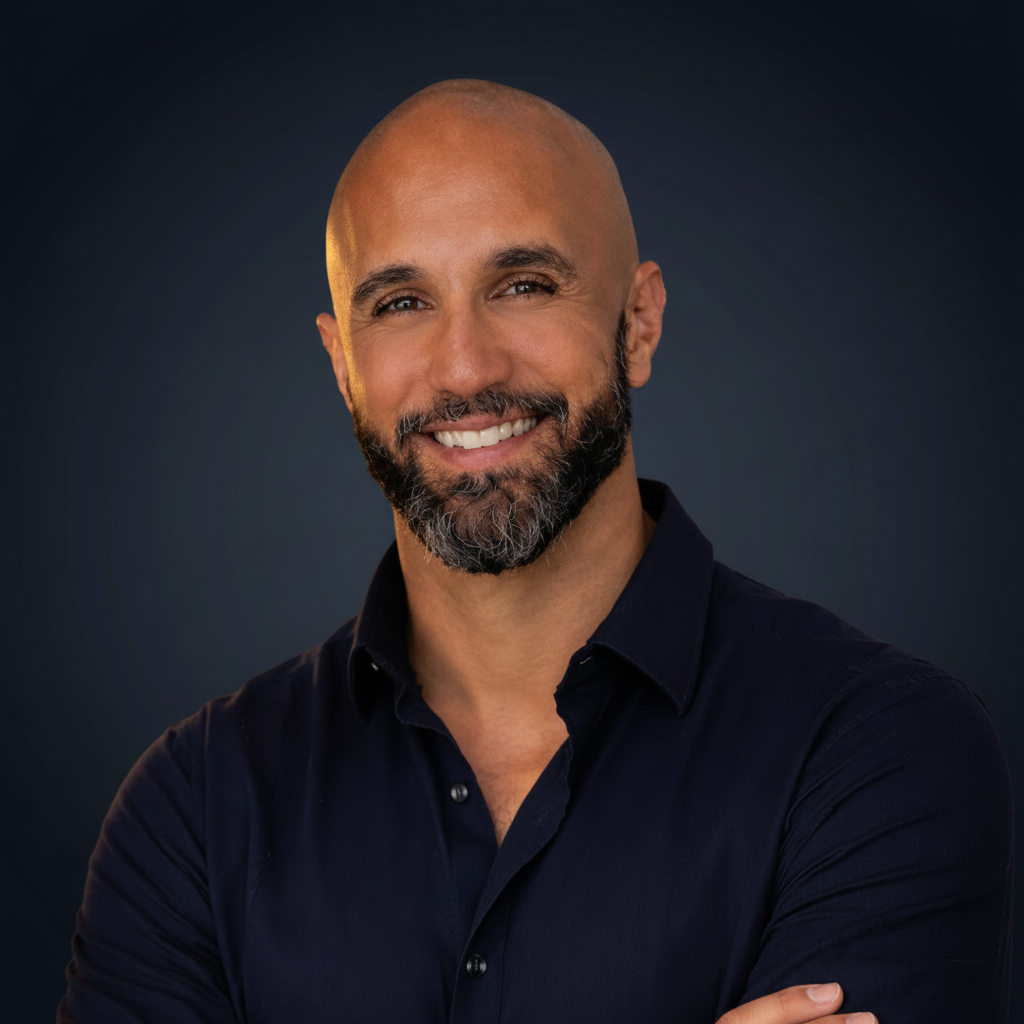
Charles V
🇨🇦Canada
Not signals. An OS for traders.
The Chart Whisperer spent a decade building his methodology in private before saying a word publicly. The logic was simple: he had nothing worth saying yet. The early years of trading are mostly being wrong in new ways, and the system he was building — the Continuation Acceleration Protocol, or CAP — needed to survive full market cycles before it earned an audience. By the time he went public in 2024, he had logged more than 30,000 hours across Bitcoin, Ethereum, Solana, gold, forex, and indices. Peak win rates: SOL 93%, BTC 83%, ETH 73%, gold 72%.
CAP is a mechanical, logic-based framework he describes as "if this, then that." No predictions, no opinions, no feelings about where the market is headed. The system presents conditions; his job is to obey them. He distinguishes sharply between a winning trade and a profitable one: a winning trade is any trade where he followed the protocol exactly. Even the losers count. The only real losses are the ones where he broke his own rules.
He runs the platform at chartwhisperer.ca and operates under the handle @TCW_CAP. He is currently based on a farm in Southeast Asia, which he describes as his best risk management tool: when the session ends, he walks outside to soil, dogs, and weather. The market becomes one thing he does, not the thing he is. He went public to prove one thing — that the methodology can be taught, and that the measure of success is how many traders eventually stop needing him.
Interview
You spent 10 years as a private trader with almost no public presence. What made you choose that path and what changed recently?
I went private because I had nothing worth saying yet. The early years of trading are mostly you being wrong in new and creative ways, and the last thing the world needs is another guy narrating his learning curve like it's a finished product. I made a deal with myself: build the thing first, prove it across full market cycles, then talk. What changed is that the work crossed a threshold — the system stopped evolving in big ways and started just running. When a methodology survives a decade and tens of thousands of hours of screen time and still holds up, keeping it in a drawer starts to feel less like discipline and more like waste.
You call yourself The Chart Whisperer. How do you describe your relationship with a chart? What do you hear that others miss?
Most people look at a chart and ask "where is price going?" That's the wrong question — it's like asking a stranger to tell you their secrets. I ask "what are the participants doing right now, and what are they forced to do next?" A chart is a record of decisions under pressure. What I hear that others miss is the silence — the moments where nothing is supposed to happen and something does, or where everything says move and the market refuses. That refusal is information. The name Chart Whisperer is a bit tongue-in-cheek, honestly. I don't whisper to charts. I shut up long enough to let them finish their sentence.
You have your own trading protocol developed over a decade. Without giving away the full system, what is the core principle behind it?
If this, then that. That's it — that's the whole philosophy. The protocol is a set of conditions, and when the conditions are met, I act. When they're not, I don't. No opinions, no predictions, no "feeling" about where Bitcoin is headed. A decade of work went into figuring out which conditions matter and how they stack — that's the part I keep close. But the principle is mechanical honesty: the market either presents the setup or it doesn't, and my job is to be obedient to that, not clever about it.
Why BTC and ETH specifically? What is it about these two assets that keeps your focus there?
Depth and honesty. They're the two crypto assets liquid enough that the patterns I trade actually mean something — there's enough real participation that the footprints aren't noise. And specialization compounds. I'd rather know two markets at a level most people never reach than know fifty markets the way everyone else does. The methodology works across forex, metals, indices — I trade those too — but BTC and ETH are where I've logged the most hours, so that's where the edge is sharpest.
You mentioned an 83% peak win rate on BTC. How do you define a winning trade in your system?
Simply: the trade hit its target before it hit its invalidation. No moving goalposts, no "well it would have worked if." And I want to be careful with that number, because it matters how I say it — 83% is the peak win rate, on the highest-confluence tier of setups on BTC. Those are the rarest signals, where everything lines up. The everyday numbers are lower, and anyone who quotes you only their best number is selling something. But yes — when the system says all conditions are met, history says it's right more than eight times in ten. A winning trade, though, in the deepest sense, is any trade where I followed the protocol exactly. Even the losers. The only real losses are the ones where I broke my own rules.
What was the hardest period in your trading career and how did it change your approach?
The middle years — when I knew enough to be dangerous but not enough to be consistent. I'd have a great month and convince myself I'd arrived, then give it back being a genius. The hard lesson was realizing the problem was never the analysis. It was me — the part of me that wanted to be right more than I wanted to be profitable. That's what pushed me toward a fully mechanical approach. I stopped trying to fix my psychology and instead built a system where my psychology had nowhere to interfere. You don't conquer your emotions. You design them out of the process.
You moved to Southeast Asia and live on a farm. How does your environment and lifestyle affect your trading mindset?
It's the best risk management tool I own. On a farm, you can't rush anything. I'm not sitting in a city apartment refreshing a P&L out of boredom. When the session's done, I walk outside and there's real life: soil, my puppies, weather, work for my hands. The market becomes one thing I do, not the thing I am. Most traders' worst trades come from needing action. The farm removed the need.
You built your entire edge in private. Now that you are going public, what do you want the world to actually understand about your work?
That an edge isn't a secret — it's a discipline. People will come looking for the magic indicator, and what I actually have is ten years of refusing to act without a reason. I want people to understand that trading can be boring, repeatable, and rules-based, and that boring is the goal. If someone walks away from my work thinking "I don't need to predict markets, I need a protocol and the discipline to obey it" — then I've said the one thing worth coming public to say.
What is the one mistake you see most traders make that you stopped making a long time ago?
Having an opinion about where the market should go. Most blown accounts start the same way: a trader decides what's supposed to happen, the chart disagrees, and he fights it instead of listening. I did that for years. Then I finally accepted that the market doesn't owe my analysis anything — it does what it does, and my only job is to respond to what's actually in front of me. The day that truth sank in, really sank in, my equity curve changed direction.
Where do you see yourself and your community in two years from now?
Same lifestyle, same protocol, same charts — but with a community of traders around it who think mechanically. Not signal-chasers. People who learned the if-this-then-that way of seeing markets and run it themselves. I measure that future in one way: how many people stop needing me. If in two years there's a group of traders who are calmer, more rule-bound, and more independent than when they found me, the public chapter will have been worth it. The private decade built the system. The next two years are about proving it can be taught.
Sources
- Title: TradingView — TheChartWhisperr· official
- Title: X (Twitter) — @TCW_CAP· official
- Title: chartwhisperer.ca — CAP system· official