
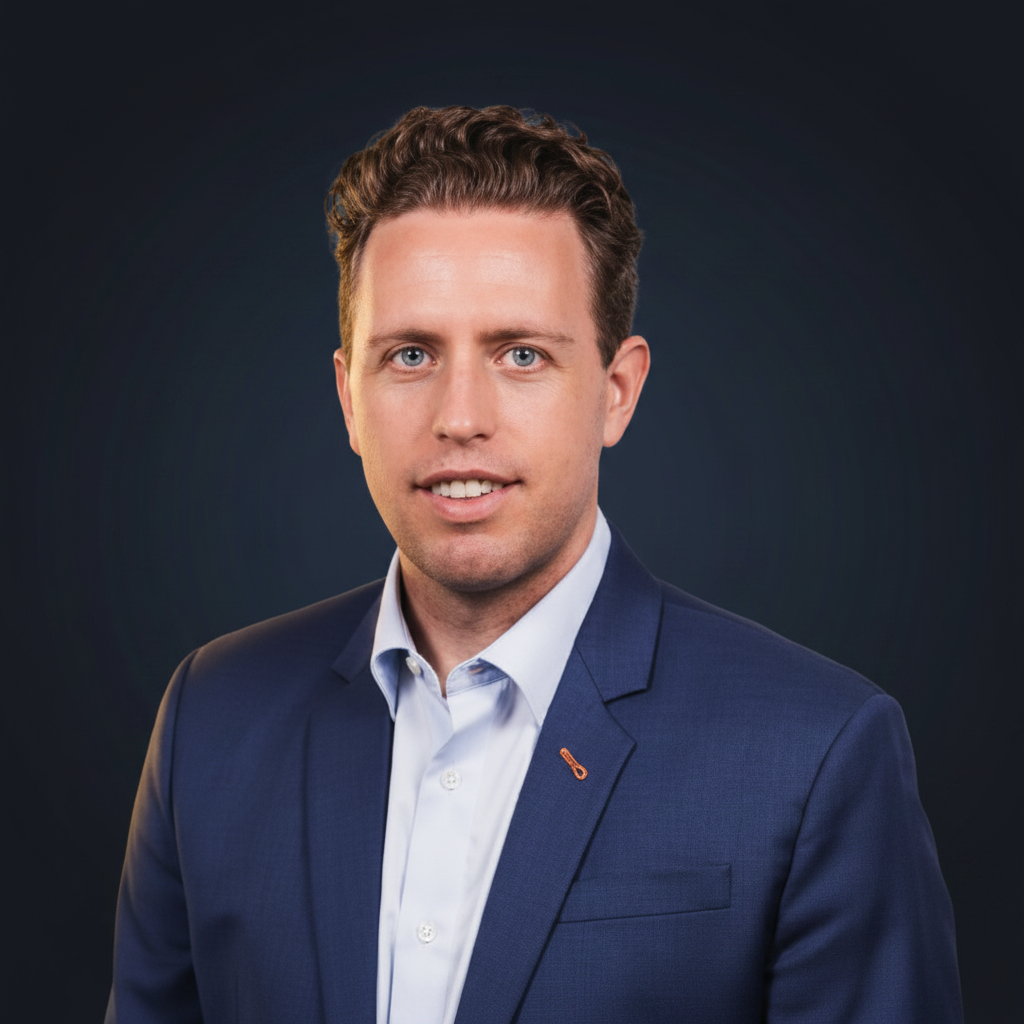
Brent CarlileVerified
WCTC 2024 winner, 532.3% audited; WCTC 2020 runner-up, 287.92% audited
🇺🇸United States· Jackson, WY
2024 World Cup Futures Champion at 532%, a multi-asset macro trader who beat a leaderboard historically dominated by systematic algos.
Carlile placed 2nd in the 2020 WCTC futures championship at 287.92%, a result built after entering mid-May and closing an early deficit with a 36.16% return in the final month alone. He returned in 2024 to take 1st at 532.3%, the largest single-year return since the early-2010s Andrea Unger reign, finishing roughly 333 percentage points ahead of the runner-up. He describes the 2020 and 2024 results as occurring in the same brokerage account over a unified 4.5-year record, with a combined real return of 1,501.90% across that period.
His 2024 season was profitable in 10 of 12 months, including three separate months with compounded monthly returns above 60%, built across a wide range of markets rather than a narrow rates bet: early gains in platinum tied to China and US monetary policy, followed by copper, silver and gold, with the largest single winner coming from positioning around the 2024 yen-carry-trade unwind in Fed Funds futures and other risk-off-sensitive markets.
He also traded actively around the unusually high volume of global elections that year. He describes himself as a multi-asset macro investor and trader rather than a rates specialist, and has separately traded equities and options for years in other accounts. He also finished 3rd in the 2021/2022 Global Cup Championship of Futures Trading, in a distinct energy-focused strategy run in a separate account.
The WCTC title led to a Partner role at Wealth Fund, a UK-based financial services and hedge fund start-up currently pursuing FCA regulation, where he is set to serve as Chief Investment Officer at launch. He also holds a macro investing instructor role at The Trading Academy, a pipeline intended to funnel emerging portfolio managers toward Wealth Fund.
Interview
How did you first hear about the World Cup Trading Championships, and what made you pay the entry fee and put real money on a public leaderboard for the first time?
I became aware of the World Cup Trading Championships in the early 2000's while studying abnormally strong market performers and asking myself what attributes make great financial traders. I noticed various top performers implemented a diverse range of different strategies and determined it had to be more about the analysis skillset, risk management, position sizing, and psychological composition of the traders executing the strategies than the strategies themselves. It paved a mindset path of holistic development on the "complete market trader" rather than trying to chase the mystique of a perfect algorithm with what I call the "cheat code" seeking mindset. Is there a perfect strategy in the game of chess that can be pursued the exact same way every time to achieve victory? No, because your opponents are constantly evolving and it always involves game theory on both sides of the board. Financial markets are similar in that regard, and that is what I learned early on in studying top performers who repeated impressive market performances in events such as WCTC's. A strategy is only as good as its manager's capabilities of using it in the right situations with effective risk management.
Before entering my first competition in 2020, I had largely considered myself more of a defensive, risk-temperate trader. I thought jumping through some hoops to compete in a high profile competition might be a way to push myself into figuring out how to boost the offensive side of trading markets as well. How does a defensive oriented basketball player get better at scoring? Take part in a 3-point shooting contest with plenty of people watching.
Why does a private trader who is already making money need a tournament at all? What does it give you that regular trading does not?
The human spirit seems to gravitate toward an appreciation of competitions across many different fields. Sports are a prime example. The World Cup Trading Championships piggyback on the podium format and jargon of the Olympics. Most competitors in spirit who think they have a chance like the idea of a good old fashioned judged competition, and it is rarely purely about money. It can be a way to gain some recognition in your field and open opportunities, but often it is simply the case of proving to yourself that your hard work and dedication have some additional meaning besides money. That is true in my case.
What is the hardest part of a championship year psychologically: drawing down in public, chasing a leader, or the waiting between FOMC meetings when your method tells you to do nothing?
One thing that sets apart a trading championship from comparable events in other fields is the length of time. It isn't just a long weekend or even month. It is generally a 12-month stretch of prolonged focus day in and day out. It is a sacrifice in the sense that you may not be able to participate in the broad spectrum of activities and communications in the normal way you usually would. I enjoy watching sports but did not watch much live sports for large stretches. Most of my normal music intake was replaced by listening to macro related interviews and research. I was reading and consuming content more likely to help my effort to succeed in the markets.
Staying disciplined in a routine for a very long stretch of time without breaking pace is what is most psychologically challenging. If you can do that, you are genuinely doing your best and everything else is sideshow noise or beyond your control.
In 2020 you lost the title to Stefan Seibert in the final stretch. What was happening in those last weeks, and what did you do differently in 2024?
In 2020 I actually did not enter the World Cup Championship until the middle of May. It runs from the beginning of January through December. It was the first competitive trading event in which I participated. I was fairly tied up with a separate project for my macro consulting business in the Netherlands at the time until the middle of spring.
Then I had a schedule opening and decided to throw my hat in the ring of the futures division Championship with no expectations whatsoever. It was a bit like starting a marathon when the pace setters are already more than 1/3rd into the race. So I was playing catch up to Stefan and the podium place holders for the remainder of the year while closing the gap over time.
Headed into the final month of December I believe I was still in 5th place. I recall being somewhat surprised I was in the hunt given the late start and thinking, "well, there's no point in finishing 5th when only the top 3 get trophies." I dug in with some purpose in December and thankfully was able to make a homestretch push with a 36.16% monthly return. It allowed me to sneak past the very formidable Chinese trader, Yuwen Cao, for 2nd place near the end of the month and Championship finale. Ms. Cao was performing consistently well all year and had a commendable podium finish. Mr. Seibert remained competitive and didn't make mistakes toward the end, keeping him at the top slot he was in for most of the year at the finish.
It was clearly a missed opportunity on my part beginning so late in the year. My first few months of market performance in 2020 in other accounts was quite good so I likely would have had a competitive shot at winning had I started earlier, but we'll never know and it was a well deserved win by Mr. Siebert. My previous more defensive risk management focus helped me at least make solid progress in the 7 1/2 months I participated. The 287.92% return over that time occurred within the bounds of a max drawdown of 9.31% on a monthly basis. What I did differently in the next competitions was show up on time!
Were you watching specific rivals during the 2024 season? Did you know who Tirutrade AG was while they were chasing you?
One different aspect of 2024 besides starting at the beginning of the year was that I paid very little attention to the standings during the year. I was more focused on monitoring the standings during my first event in 2020.
In 2024, I decided that I would simply do my best and compete against myself no matter what. The risk of making a mental mistake would be greater if I got caught up in checking the standings too often. It sounds a little odd, but there was a 2-3 month stretch or so when I was hitting the highest returns around summer when I did not check the standings at all. I started receiving quite a few LinkedIn messages from others informing me of the standings. I figured I was basically doing my best, so what else could I do besides make an error focusing on the wrong things? If someone else was beating me next time I checked, then that person deserved it and that would be fine.
My instinct was that it didn't seem like a particularly easy year for futures trading, and market volatility was quite low for several months, which makes earning a high return more challenging for everybody. So the thought was if I could still execute well then I'd have a good chance at the podium, so don't worry about the others. When I did check the standings, I was mainly looking for how much turnover in the top performers there was. The more turnover in the names, the less likely they would stay at their ranking. Seeing the same familiar names in the hunt means there are consistent traders in the pack with a better chance, not just one-month wonders.
Once I gained the lead I kept it, kind of like Stefan Siebert in 2020. The irony is that it doesn't always feel like you are crushing it in the moment until after the fact and you review your trades and run the numbers. It's probably for the best I didn't focus much on "feeling" like it was a great Championship year. The time for that kind of reflection is afterward, not in the moment.
As much as I made 2024 a competition against myself during the year, once it was over, noticing a 333 percentage point cushion over the next finisher seemed like a more interesting performance indicator than my own final return number. That is emphasized when you consider the respectability and high caliber level of the competing field, such as Tirutrade AG. It means market conditions were not easy compared to several other years. There were a handful of Championships like that, especially post-2008, and I always found those grittier market conditions fascinating for competition.
The WCTC format: percentage return over a calendar year, real money, audited by Robbins. What does that format get right, and what would you change?
I believe it is a very adequate format for individual traders and investors. It was the gold standard going back decades. I'd highlight the calendar year length being an important factor in assessing the merit of a market performance in my view.
The percentage format favors small accounts and aggressive leverage. Is it fair to compare a trader running $15K against a trader running $500K on the same leaderboard?
That is certainly a common perception. However, I think there is some nuance many may be missing in this discussion. It is a good topic worth dissecting in some detail. There are both advantages and disadvantages to smaller account equity sizes.
Smaller accounts have a significant portion of active futures contracts excluded from viability due to margin requirements being too high for the account size. Fewer potential markets in a tradable universe is a disadvantage, all else equal. Less market and factor exposure diversification can be a risk management nightmare for a small account over an extended period of time, such as 12 or more months.
Additionally, micro futures have much higher commissions for equivalent notional contract sizes compared to minis. If a micro future is 1/10th the notional size of a mini, 10 micro futures carry substantially higher all-in transaction costs than 1 mini in a Championship. This all impacts your "transaction costs to account size ratio" for the worse in a material way with a small account.
Regarding "leverage," the margin requirements per contract are the same for a $15k account as a $500k account per the rules. The leverage is, thus, actually the same by definition unless the trader voluntarily chooses lower leverage for a larger account. For the vast majority of strategies, small accounts are more difficult to manage and far more likely to blow up at some point over 12 months, much higher transaction costs as a percentage of account size, fewer markets that can be traded, less market diversification, yet still the same margin requirements.
The main purpose behind offering a lower barrier to entry for small accounts is to encourage more Championship participants. More participants means more competition, and therefore, more of a challenge to overcome for the podium winners.
To be sure, there is increased potential psychological stress to overcome managing a larger account. It is also entirely reasonable to award an extra "impressive factor" behind generating higher currency unit profits. I'm not opposed to a separate Championship "heavyweight" tier for higher starting account sizes, perhaps in excess of USD50,000 or USD75,000.
I admit to disliking managing small accounts in general for the reasons mentioned above. But in terms of demonstrating skill? It's very possible growing a tiny account to a large one over a prolonged period under tremendous costs and barriers is even more difficult to pull off than staging a high return from a high starting balance with more strategy flexibility and lower transaction costs per account size. At the very least, there is balance in the tradeoffs. I can see merit to both sides of the account size argument. I don't think smaller accounts are as advantaged as many believe in a Championship other than for short periods of time. Not for a year anyway.
The verified title: what did it actually change in your career? Followers, investors, WealthFund credibility. What came specifically from the title rather than from the returns themselves?
One of the initial impacts is a sudden "pile" of LinkedIn messages and various social media messages to respond to. All kidding aside, a high profile Championship victory or series of podium finishes can open up new opportunities. I am thankful to have been given a path into becoming a Partner at an exciting new financial services firm and hedge fund called Wealth Fund. I also have a macro investing instructor role at The Trading Academy, which will eventually funnel emerging talented portfolio managers into Wealth Fund. Wealth Fund is a start-up firm currently seeking UK FCA regulation and licenses. Upon launch I will serve as the Chief Investment Officer.
Crypto exchanges now run their own tournaments: Bybit's WSOT gathers tens of thousands of participants with millions in prizes. Do you follow that world, and would you ever compete there?
I'll be honest and say I do not follow it closely. The new surge in tournaments is a double edged sword, so to speak. In a sense, I think an increase in healthy competition across asset classes is generally a good thing. However, many of the newer events are short duration in nature and may come across as encouraging a gambling mindset over true trading and investing skill.
On the net, I'd consider new interest and attention in various market trading events as a win in the sense that it could make politically punitive proposals such as financial transaction taxes less likely to ever see the light of day with so many individuals with skin in the game. At least that's my theory. If the people want more trading tournaments, let the people have more trading tournaments.
If you were designing the perfect trading tournament from scratch: what rules, what duration, what verification, what would be at stake?
I happen to find a great deal of legitimacy in the way the original World Cup Championships were constructed, a single event lasting 12 months. In modern flavor, there should be separate divisions for forex, equities, and crypto. I'd add a "heavyweights" tier of higher starting account balances. It would be reasonable for a max of three or four different event organizers to carry similar events and keep a healthy element of event competition. But only one Championship per year, per organizer (with different asset class and account size divisions). The percentage gain over one-year rules would essentially remain the same.
What I would personally avoid is all of the short term events now often lasting a month, even a week I've heard. I understand the desire to bring in more business with more events across the industry. There are currently business strategies that probably think they are catering to modern short attention spans. Too many events, especially the short term ones, fragment attention and reduce the importance of the best competitors facing off against each other in credible, high profile endurance battles.
To me it feels like an analogy of being a baseball fan and having new leagues spring up everywhere with 3 inning games, 1 inning games. Then there are 10 different World Series finales, going on 40. There is less unified following of the "big one." Would that really be "good" for baseball? I suppose it depends on your perspective. I have more of a classic view in that regard.
Do you follow the current 2026 standings? Is there a trader you watch and think: this one could beat my number?
I check in on the 12-month event standings from time to time. The thing about each event is that they exist under unique competition conditions that only exist once. The market conditions, volatility, trading platform technology, transaction costs, and fill execution quality in 1990, 2000, 2008, 2020, 2026, etc. will never repeat in the same exact way. But there will always be new crops of top competitors who resoundingly deserve their place on the podium at their moment in time. I hope these events remain relevant and keep at least somewhat to their original intent for a long time into the future.
Tournament results
- 🥇2024 Futures Division — World Cup Championship of Futures Trading↗Robbins WCTC2024-01-01
- 🥈2020 Futures Division — World Cup Championship of Futures Trading↗Robbins WCTC2020-01-01
- 🥉2021-2022 Futures Division — Global Cup Championship of Futures Trading↗Robbins WCTC2021-01-01
