Mehmet ÇOBANVerified
Direct interview, August 2026
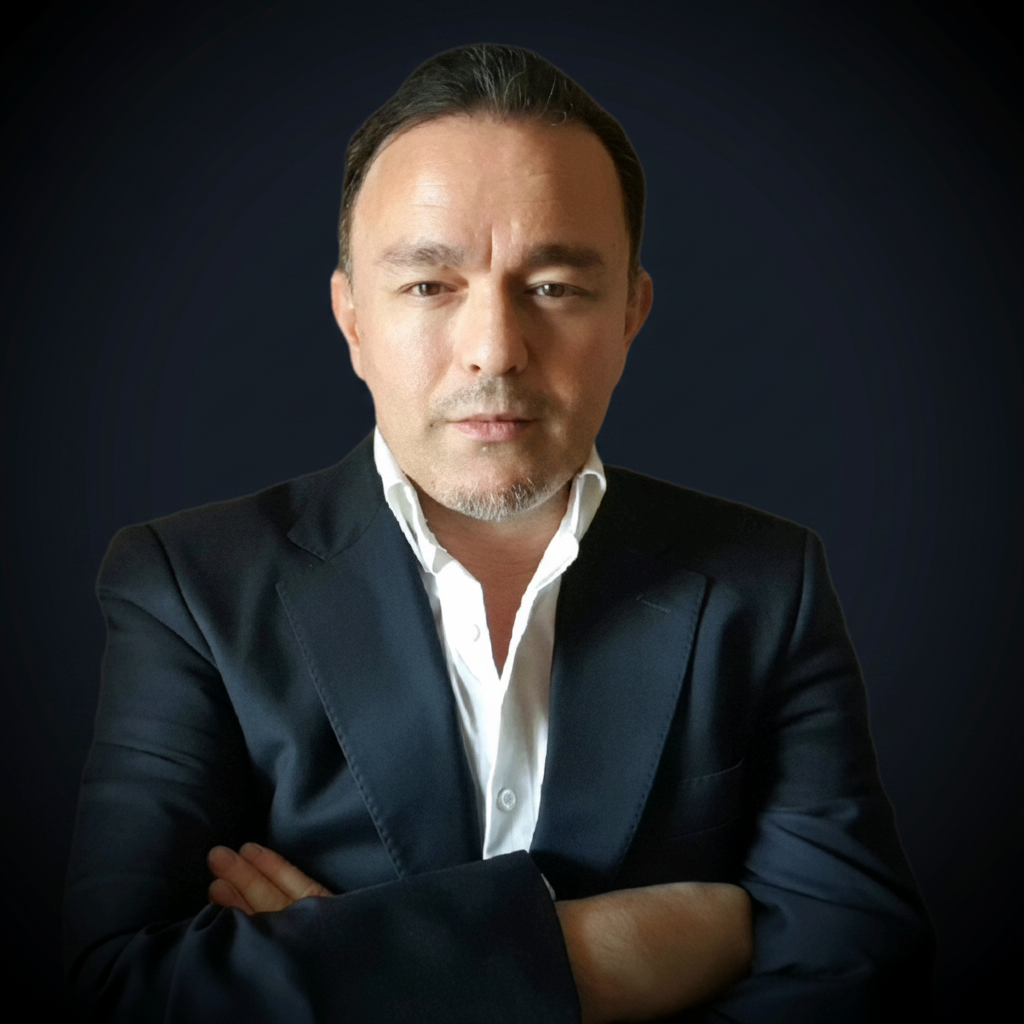
Mehmet Çoban
🇹🇷Türkiye
A Turkish economist and 25-year finance-media veteran turned independent crypto analyst: data-driven and deliberately anti-hype.
Mehmet Çoban is a Turkish economist and market strategist whose credibility rests on an unusually long institutional career. An economics graduate of Istanbul University, he has spent more than 25 years across finance and media: he started as a dealer at a brokerage, worked as a finance journalist at Hürriyet, served as editor-in-chief at GCM Yatırım, general manager at KriptoArena, and research director at the Turkish exchange Bitci. That resume gives his commentary the institutional weight most YouTube-only crypto creators lack.
Through his MCobanX channel on YouTube, X and Instagram, Çoban now publishes daily technical analysis of Bitcoin, Ethereum and altcoins alongside coverage of BIST100 equities, gold, silver and global macro. His register is deliberately anti-hype: chart-, cost-basis- and volume-driven analysis aimed at helping viewers make rational sense of the market, always with an explicit note that the content is not investment advice. He is also a recurring guest on the "Kripto Sohbet" YouTube series alongside hosts Erkan Öz and Erkin Şahinöz, which puts him in front of audiences much larger than his own channel.
Interview
You went from a dealing desk to financial journalism to research director at an exchange. Which of those three roles changed the way you see the market the most?
Financial journalism, without a doubt. I studied economics at university. However, I gained most of my knowledge and real-world experience in finance by actually living through different market conditions, learning how I should respond under different circumstances, and, more importantly, by writing about those experiences and sharing them with my readers.
At the same time, financial journalism gave me the opportunity to meet and interview some of the most important people in the world of economics and finance. Through those conversations, I was able to add their knowledge and experiences to my own.
In 25 years you have lived through several cycles. Which one taught you the most, and why that one specifically?
The cycle that undoubtedly taught me the most—and I believe made everyone question their own knowledge and experience—was the mortgage crisis triggered by the collapse of Lehman Brothers in 2008.
That period showed just how violently markets can move, not only because of economic data and fundamentals, but also because of factors such as fear, confidence and liquidity. The biggest lesson I took from it was that no matter how experienced you are in the markets, you should never consider any scenario impossible, and risk management must always come first.
You were a journalist at Hürriyet. Does that training help you resist market narratives, or does it make you more vulnerable to the hype?
It definitely helps. Journalism taught me not to simply accept a news story or a market narrative at face value, but to question the data behind it, the source, and the underlying motivation.
Stories spread very quickly in the markets, especially during periods of strong rallies or sharp declines. My background in journalism helps me step back before getting caught up in the excitement of a particular narrative and ask myself, “What do we actually know, and what are we assuming?”
I think that is one of the biggest advantages of good journalism training when it comes to the markets: being able to remain skeptical.

What do Turkish media systematically get wrong about crypto and the markets?
I don't think this should be limited to the Turkish media. Media outlets around the world inevitably make both the same mistakes and the same correct assessments.
In my view, the main reason is that although we are now talking about a market that has been around for 15–16 years, the crypto market is still very young.
As a result, it is not only people and investors who are constantly learning; journalists working in financial media are also learning something new every day in a rapidly evolving market. Sometimes, however, the pace at which journalists learn and specialize cannot keep up with the pace at which the market itself evolves.
As a natural consequence, some developments may be interpreted through the lens of traditional financial markets before they are fully understood.
I believe crypto journalism still needs another 5–10 years to truly mature and establish its own areas of expertise.
With high inflation and a weak lira, Turks are pouring into gold and crypto. Is that financial literacy, or a forced escape?
Gold investment has been part of the Turkish investor's tradition for many decades. Gold is not viewed merely as an investment vehicle in Turkey; it is also a cultural and traditional form of saving.
Therefore, I consider it quite normal for interest in gold to increase during periods when gold becomes a major topic of discussion. So while I believe high inflation and the depreciation of the Turkish lira have contributed to the increased appetite for gold, I don't think they are the fundamental reason behind it.
The situation is somewhat different with cryptocurrencies. Turkish people place a great deal of importance on information and experiences coming from people around them. In particular, during the 2020–2021 crypto bull market, Bitcoin and other cryptocurrencies began to be discussed not only in financial circles, but also on the streets, at home, in conversations among friends, on television and across social media. I believe this was one of the most important factors driving Turkish investors' interest in the market.
I also believe Turkish investors tend to be more willing to take risks compared with many other societies. For this reason, I don't think it is accurate to explain the growing interest in cryptocurrencies simply as an attempt to escape inflation and the depreciation of the Turkish lira.
I believe the search for higher returns, social influence and a willingness to take risks play an important role alongside economic necessity.
Gold, the dollar, crypto, real estate: where should a rational Turkish saver put their money in 2026?
According to the figures released by the Turkish Statistical Institute (TÜİK), annual inflation stood at 31.75% in July. Therefore, for a Turkish saver to prevent their money from losing value in real terms today, they need to achieve an annual return of at least 32%.
Gold, the dollar and real estate… All three have risen much faster in recent years than many people expected. In my view, their upward trend may continue in the period ahead, but I expect the pace of these gains to slow down significantly compared with previous years.
On the other hand, compared with these assets, crypto has recently been an investment category that has failed to meet expectations and, at times, has even lost value.
Therefore, based on my own reasoning and 25 years of experience in the markets, I believe crypto may currently offer the most attractive risk-reward profile, despite its high level of risk.
However, I do have one important concern. I believe there has been an unusually high level of artificial pricing and speculative activity in the crypto market recently—something we haven't seen to this extent very often in the past.
So I would not make an absolute statement and simply say “crypto.” But if I had to choose only one of these four asset classes today, I would cast my vote for crypto.
If you could give one piece of advice to a Turkish beginner who enters the market only to "escape inflation," what would it be?
If the sole objective is to escape inflation and preserve purchasing power, I would choose a time deposit at the moment.
The objective here is not to achieve the highest possible return, but to try to earn a return above inflation with the lowest possible level of risk. Therefore, I don't think an investor whose only goal is to protect themselves against inflation should turn to highly volatile assets such as crypto.
In short, if you are not willing to take additional risk, I believe deposit interest is currently the simplest and essentially risk-free option.
Trading tournaments hand out huge prizes. Is that good for the market, or does it encourage exactly the recklessness you warn against?
Both are possible. Trading tournaments can be positive for the market by attracting new investors and increasing competition. However, if the size of the prize encourages participants to take excessive risks, what ultimately matters is not just whether you win, but how you win.
If you designed the ideal trading tournament, what would you change so that it rewarded real skill rather than recklessness?
First of all, I would create a system that evaluates not only the return generated, but also the amount of risk taken to achieve it.
A 100% return is not, by itself, an indication of success; what matters much more is the level of risk taken to achieve that return.
Therefore, an ideal tournament should have a scoring system that evaluates return, maximum drawdown and risk management together.
Would you ever enter a public tournament yourself? And if not, what stops you: the format, or the exposure?
To be honest, I have never participated in a public trading tournament. I have no concerns about the format or being in the public eye. The main reason is simply that trading is not my primary profession.
I closely follow the markets, analyze them and invest, but I do not do so as a professional trader who actively trades every day.
In 25 years, was there a moment when you seriously thought about leaving the markets for good? What held you back?
Even if you are doing your dream job, there will inevitably be periods when you want to walk away from it. I have had such periods from time to time as well. But I never actually acted on that feeling.
I entered university at the age of 18, and that was also when I was first introduced to economics. I have been in this field ever since.
People working in financial markets probably feel the desire to step away from the markets from time to time more than people in many other industries do. It is a constantly changing, stressful and demanding world.
But at the same time, there is something incredibly compelling about this business. For me, I think that curiosity and excitement are exactly what have kept me going all these years.
Is there a loss that taught you more than any win ever did?
As you know, altcoins have been in a significant downtrend since January 2025. At the time, my analysis of the crypto market suggested that we were still in the very early stages of a new altcoin bull cycle.
I have a particular setup that I use in the markets, and at that time, the setup was giving me very strong SELL signals.
I even told my wife, “My setup is giving me a SELL signal.” She said, “Then sell.” I replied, “But according to the cyclical movements, a bull market is about to begin. So even though my system is giving me a SELL signal, I'm going to wait.”
And we all know what happened next.
That experience taught me more than any gain ever could. It taught me that if you have a system and that system gives you a clear signal, you shouldn't ignore it simply because your own expectations or your view of the market tells you otherwise.
What do you keep off-camera that would surprise your audience?
What would probably surprise most of my viewers is that for many years—and even occasionally today—I have played lead guitar with my band at some of Istanbul's well-known clubs.
Music has always had an important place in my life, even though the life my audience sees is so closely associated with finance and economics.
Strip away the money and the results: what do you love about this craft even when it hurts?
I have encountered many good stories in this market, but also many bad ones—and I have personally lived through some of them.
But this market has always given me the confidence that “If you succeeded once, you can succeed again.”
We can never know exactly when opportunities will come. But this market always reminds me that opportunities will come again.
I think that is what I love most about this profession: even when you lose something, there is always the possibility of starting again and succeeding again.