SUPER Solana | Guirak
Super Solana est la chaîne francophone dédiée à l'écosystème Solana.
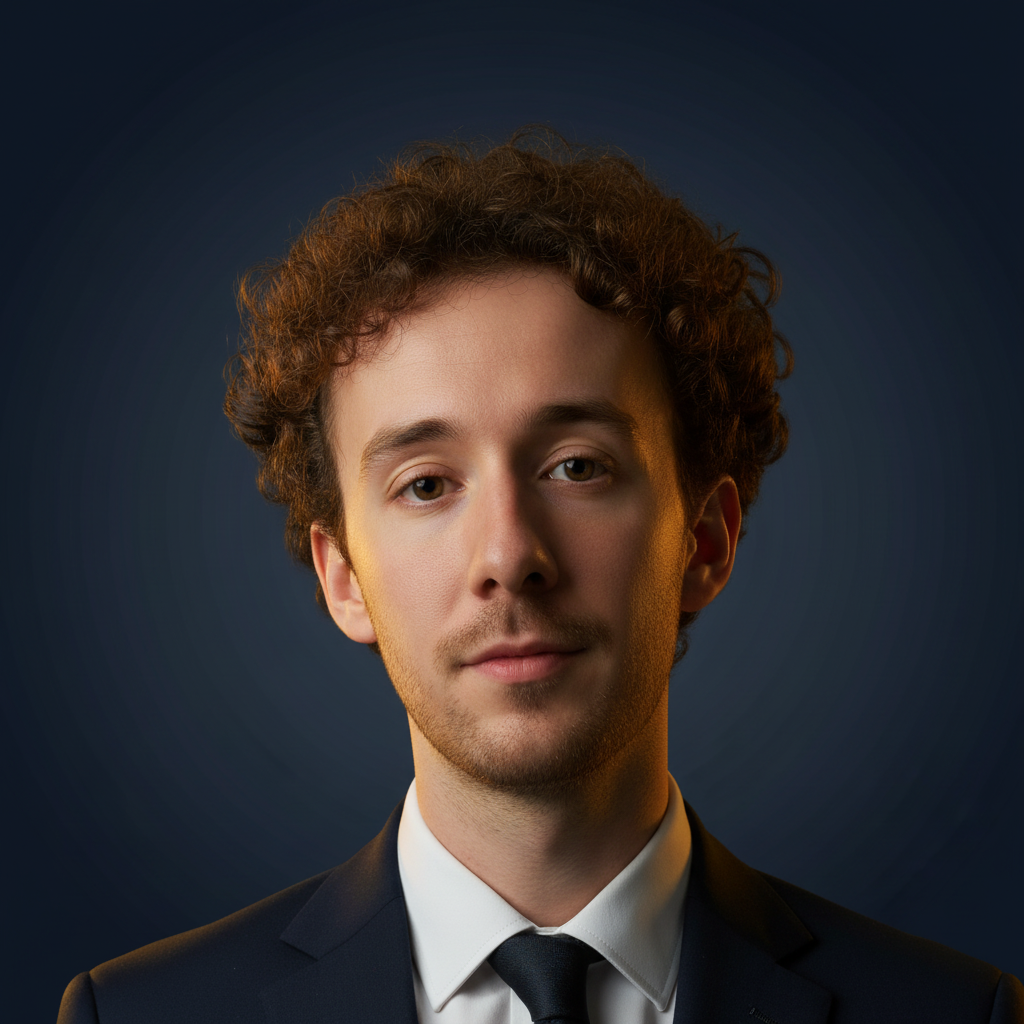
Guirak, whose first name is Will, is a French crypto creator who built his audience around the STEPN Move-to-Earn ecosystem and has since broadened into general Solana coverage. His YouTube channel SUPER Solana (@guiraksol) has grown to around 9,720 subscribers across 1,600 videos since launching in April 2022, alongside an X presence as SUPER Solana (Guirak) at @STEP_iN_CRYPTO and a Telegram channel at t.me/super_solana.
Content pushes Solana-native primitives, Jupiter, BONK, stablecoin yields on protocols like Meteora and Lulo, staking, airdrops, and NFT culture (Monkes), packaged as tutorials and news recaps for a French-speaking audience. He is an unpaid ambassador for Moonwalk Fitness and, as of 2026, holds no paid Web3 ambassadorships, having deliberately paused sponsored work this year. The channel was previously backed by the Solana Foundation through the France-based Superteam chapter, which was dissolved in 2026 and is being rebuilt. The channel carries a standard disclaimer that content is educational and not financial advice.
Interview
You started with STEPN and Move-to-Earn back in 2022. What made you stay in the Solana ecosystem once the STEPN hype died down?
The community, the vibe, the culture.
Even back on STEPN, the community was incredible, and that's also what kept me going despite the drop in financial returns from the app. Actually, I still do my STEPN today, more than 300 days a year. I just passed the 10,000 km mark and 2,200 hours of walking, plus around 400 to 500 hours of running on top of that. It's pretty wild when you think about it.
Despite the bear market, the real ones stayed. The market did the sorting. It's a bit like when something hard happens in your life, you find out who your real friends are, the ones who stick around even when things go bad.
Solana was always obvious to me. It's where I want to be and spend my time. It became my favorite virtual environment, kind of like someone who has their favorite video game they enjoy coming back to every day.
I have absolutely nothing against other blockchains. I actually think Solana will never "kill" Ethereum and that the two aren't necessarily in direct competition, different markets, different visions, different capital. In my opinion, both networks are going to grow enormously in the years ahead.
But for me, it's Solana and the Solana boys where I want to spend my time.
SUPER Solana is 1,600 videos in three years, a massive pace for a French-language channel. What's your production routine, and what keeps you going?
At my peak, I was putting out 3 to 4 videos a week, a Short every day, the Solana Café on Twitter Spaces every Thursday, and my Solana Chill live stream every Sunday for 2 to 3 hours. My longest YouTube live is actually a Meteora tutorial that runs almost 4 hours!
Today, I've clearly slowed down, mainly for two reasons.
The first is economic. In a bear market, revenue dropped sharply, it's much harder to find sponsors and partners, views sometimes drop tenfold, and ad revenue is close to zero. So I've taken on more freelance work, mostly video editing right now, plus some consulting for Web3 projects.
The second reason is that after four years running the channel, I sometimes feel like I'm going in circles. Some projects struggle to evolve, and there's been a lot of disappointment, disillusionment, and problems in our ecosystem. Naturally, the buzz isn't always the same as it was at the start.
Despite that, I keep publishing whenever I can, and I've especially kept my Sunday 9:30pm lives going. I love that format, being live, sharing the latest news, showing concretely what I'm doing, farming live on Meteora, talking about DeFi opportunities and current airdrops.

And above all, it lets me connect much more intimately with the community, the real ones, the people who genuinely care about the ecosystem and want to go deeper.
What do you think is Solana's real strength today against Ethereum, beyond the "fast and cheap" narrative?
We've already talked about its community, but I'd add that Solana is, in my view, the blockchain for the general public.
If I had to make an analogy with the physical world, Ethereum is where you go if you want to sell a piece of art or a collector's car. If you want to buy groceries or pay your rent, that's more Solana.
They simply aren't the same use cases.
The speed of development and execution is probably the difference that strikes me most. Ethereum is a famously indestructible engine, maybe a bit older with fewer options, but you know it'll still be running after a million miles. Solana is the latest fully-loaded Tesla.
That's also what I hear from a lot of developers. Several people I've known who worked on Ethereum before moving to Solana have talked to me about that ease and speed of development.
Everything feels more logical, faster, more efficient. On Solana, you just don't overthink things as much.
Jupiter, Meteora, BONK, the Monkes, if you had to bet on a single project in the ecosystem for the next 3 years, which one and why?
Crypto is still extremely young and moves so fast that picking a single project for the next three years is nearly impossible, except maybe Bitcoin.
On Solana, I mainly believe in several category-leading projects, especially the ones that already have users, a real product, and growing revenue.
All the projects mentioned are excellent, Jupiter for its ambition to become a true Web3 super-app across all blockchains, Meteora for liquidity, farming, and capital efficiency, BONK for the fun and culture, and because, whether we like it or not, Solana will probably remain the king blockchain of memecoins.
Solana Monkey Business, especially the Gen2 and Gen3 collections, are also among the most iconic, OG, and respected NFT collections on Solana. Plenty of ecosystem veterans still hold one or more Monkes, including Anatoly Yakovenko, Solana's co-founder.
You could also add Jito, Marinade, and Sanctum, which hold an important place in Solana staking and could benefit from growing institutional exposure through ETFs, DATs (Digital Asset Treasuries), and staked SOL more broadly securing the network.
But if I had to pick just one asset outside of SOL, it would very likely be JLP. It gives you exposure to Bitcoin, Ethereum, Solana, and stablecoins, while indirectly benefiting from the activity and revenue generated by Jupiter's perpetuals market.
Staking and yield strategies (Meteora, Lulo) are your big topic. What's the most common mistake you see beginners make when chasing yield?
I think I do a pretty good job on that front, because among all the people I talk to, very few tell me about truly fatal mistakes they've made!
A very common mistake, even if it's not directly yield-related, is systematically swapping crypto straight from Phantom instead of going through Jupiter. Phantom charges extra fees that can seem small on a single transaction, but add up over years and large volumes into a significant amount.
As for staking, staking your SOL is really the baseline, and it's not complicated. I actually have a two-minute tutorial on my channel explaining how to do it, that's how simple it can be.
That said, it's essential to understand the basics of wallet security. Staking your own SOL means holding and putting your own crypto to work without an intermediary. That generally lets you optimize your yield compared to certain solutions offered by centralized platforms, but it also means you're responsible for your own security. One mistake can be fatal.
The real problem I see with some beginners is that they want to move too fast and skip steps.
One of the biggest plagues is fake sites that near-perfectly replicate a well-known protocol's interface. You think you're on Jupiter, for example, you connect your wallet to the wrong site, sign a malicious transaction, and your wallet can get drained.
You need to stay constantly cautious and, above all, take the time to learn good practices before chasing yield.
Airdrops built an entire ecosystem of "farmers". Is that still a real lever in 2026, or has it become a saturated game?
Saturated in 2026? Not at all!
That was clearly the case in 2024 and for a good part of 2025. And even during those periods, it was still possible to land some really nice wins.
A recent example is Moonwalk Fitness. A lot of people in my community earned anywhere from a few hundred to several thousand euros just by taking part in challenges based on daily step counts. It was a perfect complement to STEPN, or simply a motivation to stay active.
Today, it's almost the opposite, there are far fewer people and fewer new projects. On some opportunities, there are probably only a few thousand of us actually "farming".
And less competition potentially means less effort needed and better allocations when airdrops land.
Then, once a few big airdrops drop, people will flood back in, competition will explode, and the space will be saturated again for a year or two. It's a cycle that repeats.
On Solana, we're lucky to have an extremely active blockchain, with a huge number of users, transactions, and new projects. Even as the network matures, the ecosystem stays young and new opportunities keep showing up.
For anyone interested, that's actually one of the main topics I cover during my Sunday night lives on the SUPER Solana channel.
Your channel is funded by the Solana Foundation, and you're a Moonwalk ambassador. How do you manage editorial independence with that kind of backing? Honest question, not a trap, are there topics you avoid?
I actually need to correct something first, it was a mistake on my part to leave that mention up, because my channel is no longer funded by the Solana Foundation as of 2026.
The Superteam France chapter was dissolved and is currently being rebuilt. I think it grew too fast in too little time. But I'm convinced we'll be able to start again on solid footing in the years ahead, because having a Superteam in our country, directly tied to Solana ecosystem development in France, was a real opportunity.
I'm also a Moonwalk Fitness ambassador, but unpaid. In fact, right now, I don't work with any Web3 project as a paid ambassador. I deliberately put all of that on pause this year, I needed to recharge and think about what's next.
As for editorial independence, I've never avoided a topic.
When I was a STEPN ambassador, I had just one rule, not to directly promote a competing Move-to-Earn project. That was the only real restriction.
Beyond that, I say what I think and try to stay as honest and straightforward as possible. Sometimes I choose my words a bit more carefully, obviously, but I've never been afraid to take a position.
The community knows this, and I think they especially appreciate that transparency. It's probably one of the pillars of the channel, saying things as I see them, even when it's not necessarily well received.
My "I'm leaving STEPN" video actually caused quite a stir at the time.
The Thursday SOL Café is a community format that's pretty rare in French-language crypto. What does it give you that regular videos don't?
The Solana Café happens live on Twitter/X, with a replay on YouTube the next day. So I'm not actually speaking to exactly the same community as on my regular videos.
The format is fairly simple, a first part covering ecosystem news, then a discussion with my two co-hosts, Téo and Kini, and finally a conversation with a guest building in the Solana ecosystem or in crypto more broadly.
The goal is to find the human behind the projects, share an experience, tell a story, inspire people, and above all build connections within the French-speaking Web3 community.
It's a format I love a lot, even if I no longer do it every single week like I used to.
The French-speaking crypto scene is scattered across France, Belgium, Switzerland, Quebec, and French-speaking Africa. How do you see this community, and what's missing?
What it's missing most, in my view, is more unity.
The beauty of this technology is that it can put people located anywhere in the world on equal footing when it comes to managing their money, their assets, and in a way, their financial freedom.
Whether you're in France, Belgium, Switzerland, Quebec, or French-speaking Africa, you can use the same protocols, join the same communities, and access the same opportunities.
So I'd like to see even more bridges between all these French-speaking communities, more collaboration, shared events, knowledge sharing, and fewer virtual borders.
Web3 is global by nature. The French-speaking world should manage to be too.
Have you ever taken part in a trading tournament on an exchange (Bybit, OKX, etc.)? If a 100% Solana-ecosystem tournament existed, with staking and LP instead of pure trading, what would be your ideal format?
No, simply because I barely trade at all. It's not really my thing and I don't particularly enjoy it.
I really have a long-term investment mindset, accumulate assets I believe in and, above all, put my crypto to work generating yield, trying to progress in a relatively safe way, slowly but surely.
That said, I do a lot of LP, especially on Meteora, and I find it genuinely fun, even though it takes quite a bit of knowledge.
A format that could be really cool would be an LP competition on Meteora, where the ranking would be based on percentage return rather than dollar profit.
Otherwise, whoever deposits $100,000 automatically has a massive advantage over someone depositing $1,000. With performance expressed in percentage terms, everyone could theoretically start on equal footing.
I'd definitely take part in that!
What would you tell the Will of 2022 who was launching his channel from scratch?
First, I'd tell him, stack even more Bitcoin and SOL!
And above all, systematically sell off a big chunk of the airdrops you receive.
That's probably one of the main lessons I've learned. The vast majority of crypto received through airdrops unfortunately ends up losing a huge amount of value sooner or later.
I held onto more than half of certain airdrops that were worth several thousand euros when they landed. Today, those same tokens are sometimes worth a few hundred euros at best.
An airdrop is money that sometimes falls almost "for free". Locking in at least a big portion of the gain when it arrives turns a virtual reward into real profit.
The same goes for when a crypto explodes, always securing part of the profit in BTC, SOL, or stablecoins seems essential to me. That's also a mistake I made during the last bull run, I didn't secure enough of my gains, and I watched them melt away like snow in the sun when the bear market hit.
And outside of crypto, what do you do to unplug?
For one, I walk between 1.5 and 2 hours almost every day, and it really lets me unplug from screens. I love nature and recharging in it.
Beyond that, there are mainly two things in my life, sport and partying.
On the sport side, I do a lot of it, mainly calisthenics/street workout and running. I'm also a huge skiing fan once winter arrives.
And on weekends, I love going out, seeing friends, hitting a festival, or partying. I'm a big dancer!
In the end, that's probably my balance, a lot of crypto and screens during the week, then sport, nature, and music to come back to the real world.
To wrap up, I genuinely believe self-discipline gives us freedom. My secret is balance, that's really my guiding principle.